

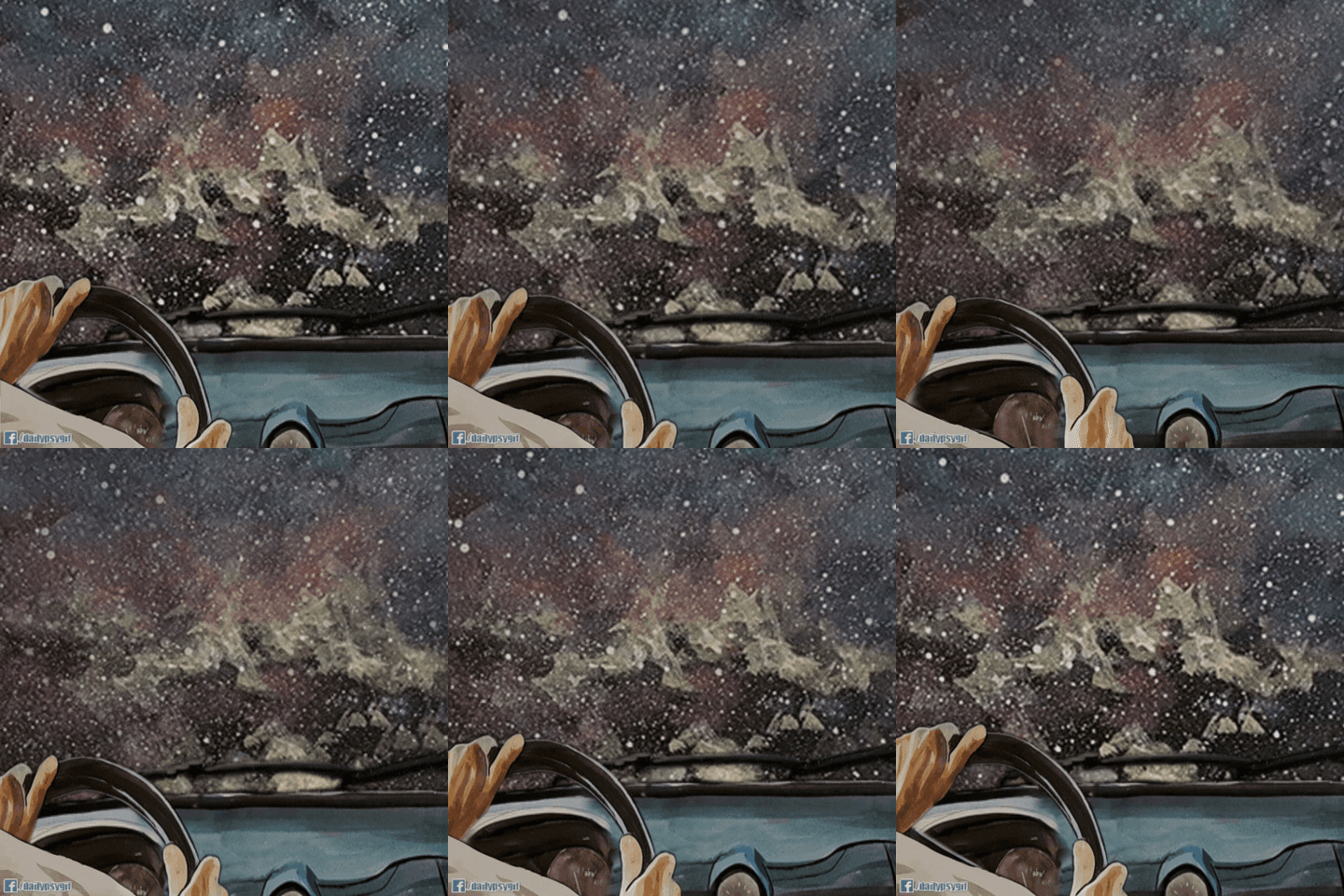
Of all the apocalypses on the cards, I draw the climate crisis on my twenty-first birthday. It could have been worse. The Silvers across the street got the dogpox epidemic, and the Johnsons next door were always crossing state lines to find the kindest dissenters to the rollback on Roe v. Wade.
“And don’t forget,” my mother says, when I tell her the news. “We had to deal with every disaster at once. You lucky kids only get one. Isn’t this new government wonderful?”
I hear her tinny voice through the phone as I look out the window. The sky isn’t as blue as it used to be when I was twelve and the gas ran out because of oil embargoes and everyone drove electric cars. Smoke spirals from up north, floods warnings crowd my notifications, and a thin layer of ash covers the dining table no matter how often I clean it. I clean it a lot in those early days, and seal up the windows, and plant careful rows of lettuce in the backyard greenhouse so I can sell them at the farmer’s market.
That’s where I meet Eric. He’s just turned vegetarian and is only twenty, so he hasn’t drawn his own fate yet. The year later, he signs up to share mine. “You’re lucky,” he says. The brightness in his face makes me want to believe him. “So that makes me lucky. At least, you can do stuff about the environment.” I discover Eric is a doer. He helps out at the recycling center, cleans up trash with a Green Team, advocates for endangered wildlife. He puts together a tangle of wires so that his exercise bike can recharge my generator. “We’ll be in great shape for doomsday,” he jokes, and the exhilaration of action makes me feel safe enough to laugh, too.
But the world keeps on ending without ever seeming to stop, and Eric spends more and more time at his buddy Sam Bailey’s place in Paradise Valley. When he comes home, he tells me about the mansion sunken in oleander and orange blossoms, where sprinklers water the grass every day and air conditioning blasts the halls clean and austere. I never ask what Sam’s apocalypse is. I never ask if Eric brings his environmental hazards there with him, or if a fate that didn’t choose you is as easy to cast off as the person you thought you loved.
I drop by Aimee Johnson’s to bury my problems under someone else’s. She’s pregnant again, with another boy she doesn’t want. I offer halfheartedly to adopt the kid, though we both know it’s too big of a carbon footprint. “I wish you would, though,” she sighs. “You’re lucky that you never get pregnant.” When we were younger, I told her about the family I wanted when I grew up. Little April, Phoebe, Luka. Now, the names are pasted on the pots of my houseplants.
Afterwards, I put on a facemask and go to see Danny Silver. His father is down with the pox for the third time in eight months. I’m glad I can hide my healthy face behind layers of cloth, but Danny made peace with his scars years ago. “We start dying the day we’re born,” he’s fond of saying with a shrug. He’s not a doer but a philosopher. “Who knows how long we have.”
Aimee lets me feel sorry for myself. I can daydream about having picked a different future, of keeping Eric with pets, babies, a swimming pool, dinners with real meat. Danny makes me depressed about how I keep going on. Why it’s worth still dusting off the dining table, recharging the generator. Why I’ve built my life around its destruction. But they both make me feel guilty for a reason I can’t name.
It’s February, and impossible kernels of hail skitter along the street as I walk home, driven by a ceaseless wind. I can hear music playing somewhere; nobody else is out. Beyond the co-op at the edge of our neighborhood, the street disappears into a smudgy horizon. Out there, eventually, is the desert. The one I’ve been trying to protect, but only from a safe distance. Staying busy with little rituals so I wouldn’t ever come face to face with my fate. Lucky, the way Aimee and Danny aren’t.
I decide that, tomorrow, I’ll borrow Aimee’s truck and drive out of town. I’ll fill the tank with a luxurious amount of gas and keep driving until it runs out. I’ll keep driving until my water bottle is empty, until I no longer remember the way back. Then, I’ll stop and stand under the sun and feel the prickle of fire on my skin and know what I’ve been fighting against for years, learn the shape of my death, so that I can understand it, love it, claim it as my own. Before I leave, I’ll tell Eric he’s free to escape to Sam’s cold halls forever if he wants. But I’ll only come back here once I know I’m no longer afraid to burn.