

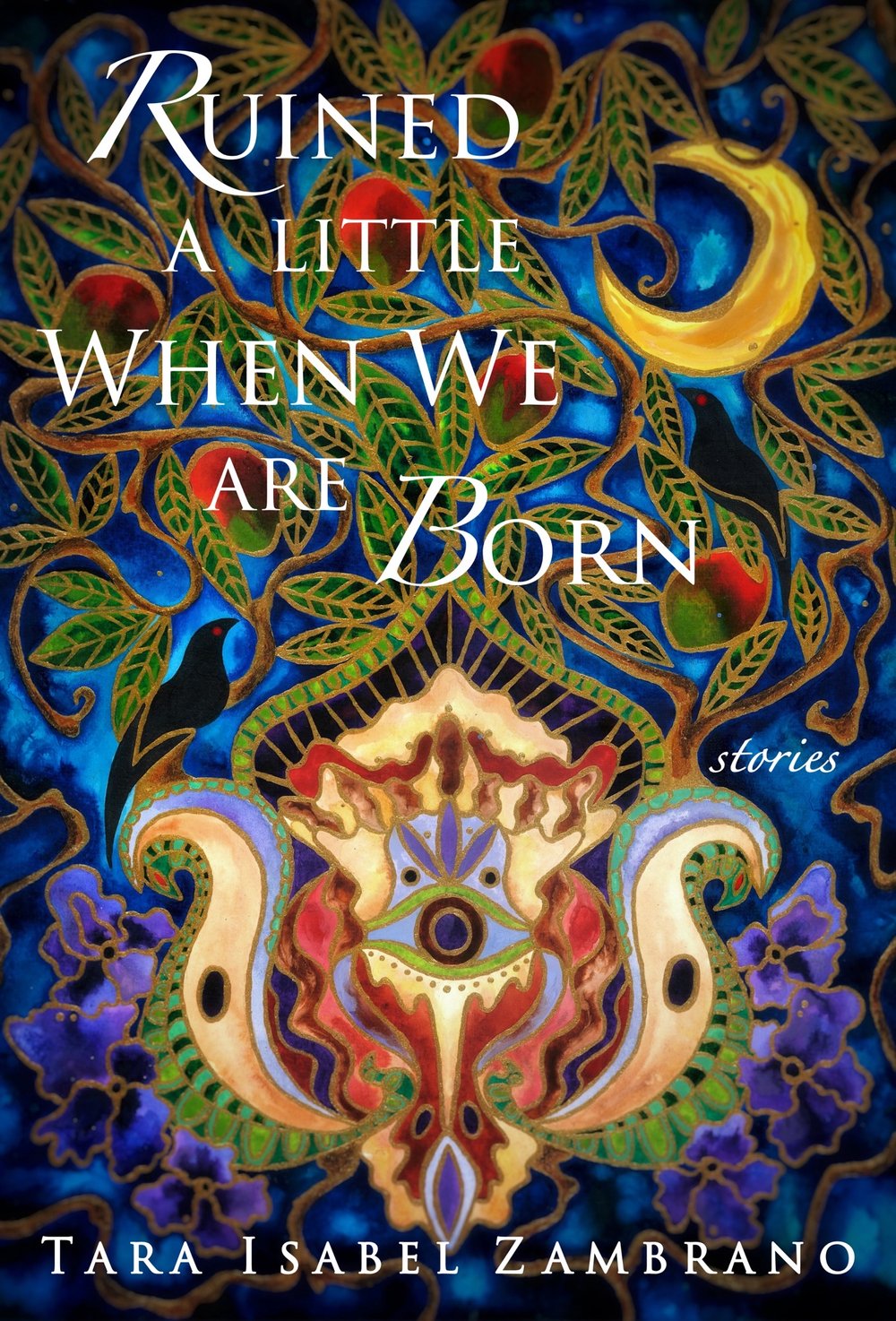
Tara Isabel Zambrano’s Ruined a Little When We Are Born offers a haunting exploration of the fears and anxieties tied to parenthood. Imagine holding someone else’s life in your hands, feeling their heartbeat pulse against your palm, and knowing that every choice you make ripples through their existence. While I’m not a parent, these stories touched parts of me I didn’t even know existed. They dive into the raw, emotional landscape of family life—its joys, its sacrifices, and its quiet heartbreaks. Though I couldn’t relate directly to the parental perspective, I was drawn into the surreal, emotionally charged narratives, finding myself both intrigued and unsettled. Zambrano’s writing held me captive, reshaping how I view family dynamics and the responsibility of caring for others.
Her stories feel like whispers from another world, like something overheard in the dead of night while you cling to your cold cup of coffee for comfort. Zambrano fuses themes of family, identity, and the weight of the Indian diaspora into a lyrical, dark magic that is both beautiful and intimidating. It’s as if she’s weaving spells with her prose, while I’m just over here trying to keep my plants alive.
In Mother, False, Zambrano introduces us to a young girl burdened by her family’s grief, a weight she can’t seem to shake. Every step she takes is heavy with emotional intensity, setting the tone for the rest of the collection. In A Young Couple, Zambrano throws us a cow’s tongue on a porch, symbolizing religious tension. It’s an image that lingers even if you don’t fully understand it—and that’s part of the magic of Zambrano’s writing.
Her prose walks the tightrope between poetic and brutally honest. Skin Rituals confronts beauty standards with the subtlety of a sledgehammer, while A Man’s Heir delves into the complexities of blended families, leaving you emotionally spent by the end.
Zambrano’s ability to inspire both wonder and discomfort in a single breath is what makes these stories stick with you long after reading.
As an electrical engineer by day, Zambrano writes with the precision you’d expect from her technical background. But it’s the emotional depth—often battling for dominance in her stories—that leaves the stronger impression. Spoiler: the emotional side wins.
If you’re a fan of Carmen Maria Machado or Jhumpa Lahiri—or simply someone who enjoys stories that make you think deeply—this collection is a must-read. These stories will haunt you long after you turn the last page, leaving you both mesmerized and a little bit unsettled. Zambrano leaves us all a little ruined, and somehow, that feels just right.