

for Rose & Buddy Fenster
“Of course he can do something. That doesn’t mean he’s going to.”
That’s what her husband had said while they were getting ready, that morning at the hotel — standing in front of the mirror, an earring that would not go in — “Before we get there,” he told her, holding his body oh so still, “we need to prepare for the worst.”
“No,” she told him. “No.”
Her husband hadn’t meant the worst case scenario — their son’s impending execution — “I mean the president,” he said. “Expect this to be a publicity stunt; expect him not to help” — in other words, she thought, expect him not to do exactly what they needed him to do.
“Expectations,” said her husband. “We’ve already had enough disappointment. If we go in expecting“ — a pause in his throat — “if we go in expecting a no but get a yes, as opposed to — well, if he decides — if he says there’s noth — I’m just saying we can’t,” and touching his hand, she said, “I know.”
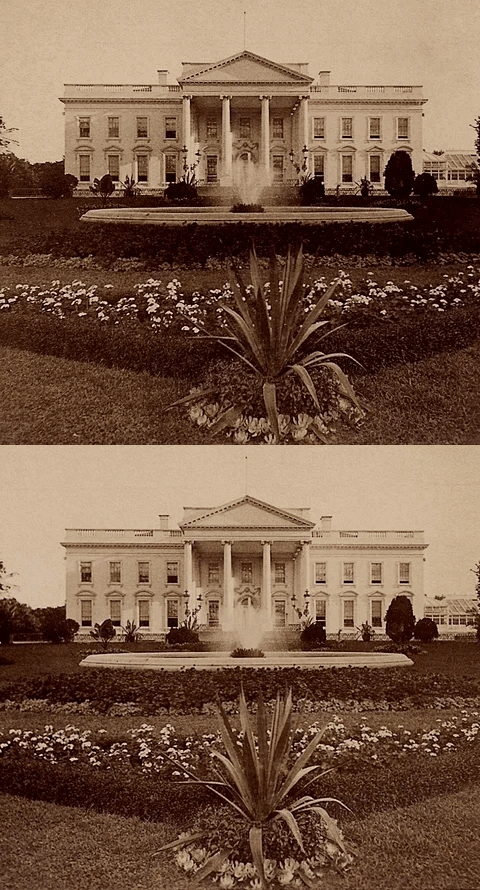
Yet here they were — not the Oval, but the Garden — a walk and talk with the free world leader, press close enough for photos but not close enough to hear what was said.
“I feel for you folks; I do,” the president standing tall before them, in front of the Pinocchio roses, “but the situation in Myanmar is tenuous. Now, I’ve personally checked in and State is making calls.”
“Calls,” she said. “As opposed to the ones they’ve been making.” Her husband breathed in sharply behind her.
“My administration is doing all we can,” the president smiling toward the press, “I mean that. But it’s essential not to undermine the greater effort our country is making to isolate Myint Swe’s regime.”
“What does that even mean,” she asked. Her husband said nothing; his weight started to shift: left foot to right then back again.
“Look, folks, here’s the deal: A lot of this is outside our control. Your son isn’t military —”
“— which is why he should be released —”
“— but because of that, we can’t go in guns blazing. The previous administration, maybe” — and not for the first time she regretted her vote; her husband started to lean — “but we believe in a more diplomatic approach.”
“He’s twenty-three.”
“Believe me,” the president now signaling his aide, “I have every compassion. It’s outrageous the way they continue to hold him and our other devoted members of the press.”
“He’s not an other,” her husband said, hands tightened into fists, “Do you even know his name?”
“I’m sorry,” the president gesturing again towards his aide, “but there’s nothing I can do.”