

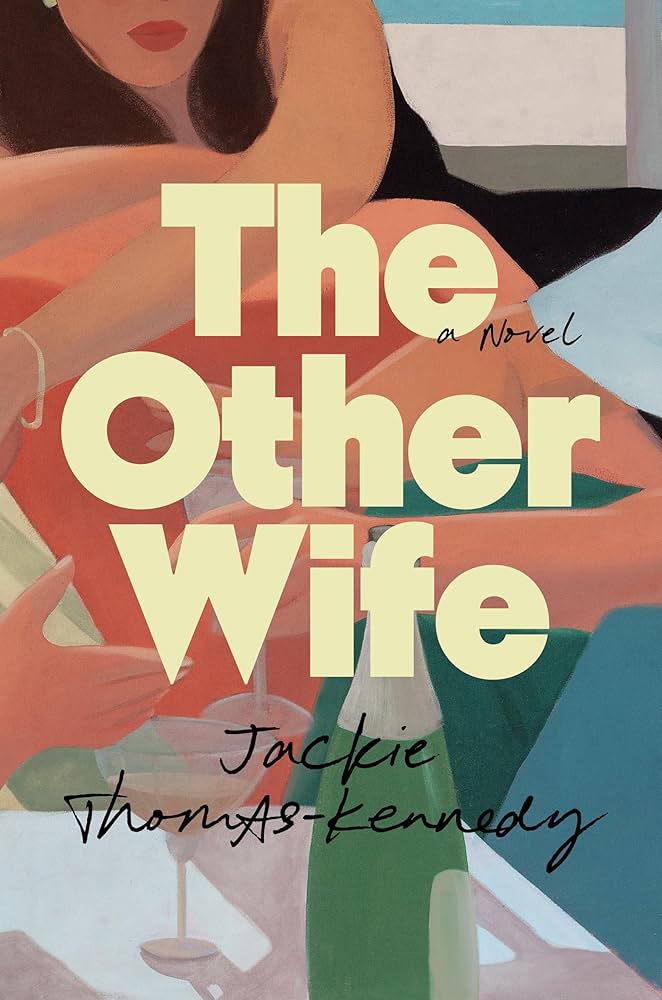
There are days where I can’t tell if I’m bored or exhausted or just rewatching the same thought over and over. That’s exactly where Zuzu lives in The Other Wife. Not in a dramatic spiral. Just suspended in a life that should be satisfying, yet somehow keeps buzzing like a light left on in another room.
Zuzu Braeburn is 39. She lives in a pristine Hudson Valley house with her wife, Agnes, and their toddler son. The fridge is full. The kid is loved. There’s money in the bank. It should feel stable. Instead, it feels like she’s living inside a perfectly designed life that no longer recognizes her. She moves through it with the kind of gentleness that starts to feel like decay. There’s no explosion. Just a sense that something’s been leaking for years.
Agnes is composed and steady, which somehow makes the distance between them feel colder. Zuzu failed the bar twice and never tried again. Her days stretch out in curated silence while she revisits fragments of a college friendship with a man named Cash. Their text messages are hesitant, mostly logistical, weirdly polite. Not quite nostalgia. Not quite desire. Just a pulse check. A way to prove she still exists beyond the grocery list.
One moment that stayed with me: Zuzu at a playground with her son, watching Agnes make small talk with another parent. Zuzu zones out, staring at the wood chips. Her only thought is that the scene looks correct. Not that it feels correct. Just that from the outside, it tracks. That’s the whole book. Nothing is wrong, but none of it feels right.
Jackie Thomas-Kennedy writes with a kind of surgical quiet. She doesn’t overstate. She just lets the tension drift in. She’s published short fiction in The New Yorker, The Atlantic, and Guernica, and was a Stegner Fellow at Stanford. You can feel all that control here. There’s not a single sentence begging for your attention. It’s all about what’s left unsaid.
The structure slips between present-day stillness and foggy college flashbacks where Zuzu and Cash hovered near something intimate but undefined. The transitions aren’t labeled or clean. You’re expected to feel the shifts instead of being told. That’s what gives the book its weight. Memory doesn’t announce itself. It just shows up when you least want it.
Zuzu isn’t trying to blow up her life. She isn’t even sure she wants something different. But she can’t keep pretending that this version of herself is enough. She’s too observant for that. She notices things like how Agnes organizes the refrigerator by height. How even their son’s play feels engineered. The more Agnes leans into control, the more Zuzu starts to vanish. Not in a dramatic way. In the way that happens when you start making yourself smaller just to keep the temperature down.
It would’ve been easy for this novel to play into domestic ennui tropes or turn Zuzu’s queerness into a marketing hook. But Thomas-Kennedy avoids all that. She doesn’t dramatize or sterilize anything. She just sits in the flatline and lets you feel it. That takes restraint. It also takes clarity.
The title, The Other Wife, is doing quiet work. There’s Zuzu, who feels like a placeholder in her own marriage. There’s Cash’s wife, who exists in the margins as a sort of silent rival. And there’s the version of Zuzu she never became. The one who passed the bar. The one who maybe stayed with Cash. The one who chose a different kind of intimacy, or a different kind of risk. The other wife isn’t another woman. It’s a mirror.
This book belongs in the same room as Jenny Offill’s Dept. of Speculation, Gwendoline Riley’s First Love, or even early Ferrante before people started misreading her as melodrama. But it doesn’t try to sound literary. It sounds precise. It doesn’t want you to underline anything. It wants you to sit with it and squirm a little.
What I loved most was how nothing is resolved. The story ends, but nothing is clean. Zuzu is still there. Still texting. Still thinking. Still waiting to feel like a real person again. You don’t walk away from this book with clarity. You walk away thinking about every small decision you made without realizing it was permanent.
The Other Wife doesn’t ask for your sympathy. It just shows you what happens when a person stops asking questions, then suddenly starts again. It’s not a story about escape. It’s about maintenance. And all the selves you lose in the process.
The Other Wife is out now from Riverhead. Grab it wherever you usually get your books.