

She was careful, so for a while no one noticed. There was always someone sloppier, a bartender whose eyes went gluey mid-shift, a server with shrimp confit knotting the skin along their lower jaw, hoping Expo was too bombarded by tickets to notice scraps disappear as they called for hands, hands, hands, hands.
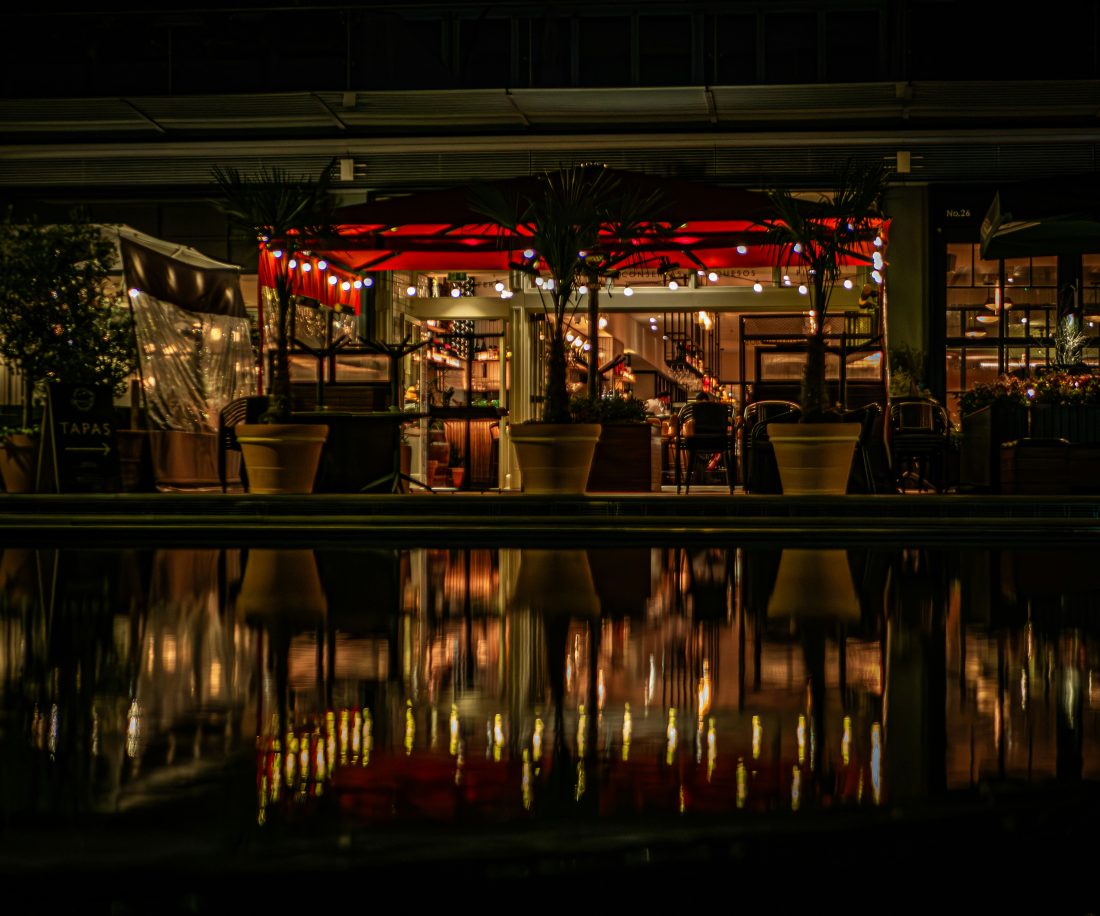
The restaurant specialized in overpriced tapas, finger foods on ceramic plates with artisanal impurities. A mounted boar’s head overlooked the hostess stand. The wine books were the size of pocket bibles, handbound in upcycled leather. A place designed for people to feel happy hour rich, to lose track of food already so easy to eat, easier to miss.
In front of the flooded dish pit the other servers idled, button ups buttoned down, spearing chimichurri carrots or plucking marinated olives from flatbreads, teeth scraping the last bites of the discarded flan comped for anniversaries—the second, the fifteenth, the fortieth, it didn’t matter. Decades of stomachs macerated vats of custard, an archive of embittered monogamy cast in mahogany booths. They were a cavalry of human garbage disposals; they were filthy, forgot soap beneath the nail. Not like her.
No, she had rules—she touched that which went otherwise untouched—she despised waste—but even when she broke them there was safety in stepping quietly, staying mum. The others were career servers who sold big bottles of Rioja wine to two-tops then drank themselves ill on well-whiskey at the bar next door. She was a mere spot on their radar, if that, a gnat more like, one they’d smear across the screen to get a better look at the POS system.
The manager indulged her lone wolf ways, more or less. Every shift she was assigned the lounge upstairs reserved for large parties, mainly because she never complained about pooling tips with Delia, who was more beautiful than her but horrible at serving, truly dogshit. Still: she minded her business, patrons left full and happy. On the other side of the lounge was a narrow balcony overlooking the dining room—the 200s—where only the very wealthy sat, overlooking the peasantry of first dates and happy hours below like silk-swathed aardvarks assessing a colony of ants. A different server always covered the balcony, a rotating list of coworkers that filled and unfilled the role, which they called The Guest Star. If the lounge parties bustled, inevitable on weekends, she and Delia and The Guest Star snuck champagne pulls in the linen closet behind a gold velvet curtain, two courtiers seducing a jester.
Sometimes they drank a little too much.
Shirts came untucked.
Hands, hands—everywhere.
Her only true allegiances were the back of house, the prep ladies who alternated Donna Summers and Vicente Fernández while crimping empanadas, depositing them into parchment-lined Cambros, and the line cooks, lenient as she was with their innuendos. She did nothing special beyond politeness; she knew their names and those of their children, the dreams they’d let die in order to feed those children. If any of them saw a missing plate of food, they never said so. At her they smiled the smiles of friends.
Then the new executive chef, Émil, arrived. He’d been brought in to edge the restaurant farther into the green. Known thieves and day-drinkers were asked to return their aprons. Aren’t we all a little guilty? someone joked at family meal, rewarded by sparse laughter, then promptly fired. Corner cameras were installed in all the hideouts. Light fingers grew heavy, twitching in the pockets of their slacks. But she found she couldn’t stop. Rather than deterred, she grew hungrier, ravenous. All night she thought manically of food. Her tips suffered; the customers caught her staring at their plates like an animal, smacking her lips.
Could be hyperthyroidism, her cousin, a pediatric surgery resident, grumbled over Facetime, sleepless. Or pregnancy?
She shook her head. Not because she wasn’t fucking anyone—it was all she did, really, besides working and sleeping, even more sometimes—but because she was young and uninsured, and so some answers existed outside of her stratosphere.
That plus the food thing, if anyone knew, which they didn’t, made her sound poor, which she was. Not starving, an almost ridiculous thought, almost, if it were closer to impossible instead of a paycheck or two from imminent. She did okay, she paid rent, she went out. At work, though, a compulsion took over her, a cry that would not relent until heeded. She wanted to be fed; she wanted, perhaps, to be caught.
Émil, with his surveillance, knew—he must’ve known. In fact, one week he made an example of their third, a stage with startlingly soft inner thighs, who he cornered in the office and had words with, mysterious but powerful words, they assumed, since the stage never came back.
God, he makes me horny, Delia would say, staring at Émil’s bald head shining beneath the Expo lights, his beard brushed and lightly oiled. They watched him taste sauces before service with a small copper spoon kept in his apron. On the back of his neck, tattooed in a sketchbook style, was a trinity of vegetables: onion, green bell pepper, flowering celery. A recent television show had made chefs sexy in the zeitgeist, redundantly she thought, and now the patrons, too, were overattentive, staring from their tables at Émil glowing among the yellow lamps, while they ate the fruits of his army’s labor, the foods he dreamed for them.
He could feel the surrounding heat, she imagined, the gravity of attention. Something of a competition emerged among the front of house, like he was an island destined for colonization—may I call, Chef? A question heard over and over through the night, his response always quiet, clipped.
But the prep ladies told her, over blueberry muffins she baked to surprise them, to delight but also beguile them, that Émil was just shy, when the other servers approached him he clammed up like a house cat. In reality he was a sweetheart, though the prep ladies guessed he was fleeing something, uncertain what.
So she, unlike the others, ignored him. Conversation was not her talent anyway: she dealt in erosion, she was an unsuspecting river around which others were forced to imagine new maps. At first only traces—the last few croquettes on a platter, forgotten boxes of take out—then gradually more daring, disappearing entire 4 oz steaks in the hallway before they ever hit the table, jus dripping down her wrists. She plopped entire scallops into her mouth without bothering to leave the walk-in, abandoning the empty shells on their ice thrones, she performed as if Émil watched her through the CCTV. She flitted to and from Expo with wine ringing her mouth, grinning at the line cooks with her dull violet teeth as she dutifully retrieved and delivered plates, never looking Émil in the eye, not speaking a word.
Then one afternoon, Costco chicken tenders for family meal, one of the line cooks came to fetch her. She was needed in the kitchen. At the charcuterie station, marking cheese and meat counts on a clipboard, was Émil in a Rage Against the Machine t-shirt, a faded screen print of Che Guevara’s face glancing up at her.
Chef? she asked, her gut buzzing.
Hello, he said, not looking at her until he finished his tallies. He was too tall, more awkward than imposing, like if Paul Bunyan were a hairless marathoner. This area of the kitchen was cramped, smelling of cured pork. They stood close so the line cooks could pass back and forth to tend to their stations.
He gestured toward a pan lined with parchment, green bolts of olive oil splashed across. Beside it was an 8 quart chafing dish of herb butter.
Quenelles, he said, have you made them before? She had not. He produced two spoons from his apron, both copper but larger than the one he used for tasting. He demonstrated how to smooth the spoons against each other so the herb butter formed a pale freckled orb, a robin’s egg nested on the parchment. Then he handed her the spoons, the handles warm. She wondered, with some hurt, if he even knew her name.
Cover the pan, he told her, then left. When she finished he produced a second chafing tray full with butter. Again she filled a pan, then another. It went on like this well into service and still he kept her in the corner with the spoons, he forbade the manager from interfering, he needed the quenelles for weekend service, he said, voice booming like a king’s.
At close she sudzed and rinsed her station like the rest until the silver counters winked. She was slow, she lacked the line cooks’ detailed rhythm, and in the dining room she saw Delia and the other servers mingling as they ambled toward their cars, gossiping about her, she was sure, backs hunched like coyotes who had tracked a hare’s scent to an empty hole.
The last bus left without her. No more than a block into her walk home Émil slid up to the curb in a small black car, face open to the city night and its tight wind. Here, outside, the armor had come off, he was relaxed, open.
Are you hungry? he said. She couldn’t discern from his careful tone if he was truly shy or if roles had reversed, if she was the one being lured, the confrontation she provoked now here. It wouldn’t have mattered, she knew, she would have gotten in the car no matter what he said.
His apartment was sparse, there was a square couch and little decor. A single, strong snake plant burst from a red pot toward the screened patio where the sun touched its leaves, though he was rarely home to witness, his only proof that the plant continued to grow were new marks brushed along the wall like the penciled heights of a child.
She was impatient for touch, but he was sincere about cooking. He never got to cook anymore, he said, buried in the white fridge, glass shelves overflowing with chromatic produce, plastic containers branded with blue painter’s tape. This was premeditated, then, he had expected her to come.
Whatever he placed in front of her she ate, even when she was long past full, when sweat gathered at her temples. He didn’t ask her to push, there was no direct challenge, half the time he began a new dish before she tasted the one in front of her. Her comments were short, clipped—needs salt—sticks to your teeth—more broth—less fat—he nodded, let the feedback ripple over him, goosebumps animating the ink on his forearms.
When he finally stopped feeding her, when he became the thing she must taste, his skin was plain, his asshole clean and sweet like bread. He covered her mouth while he fucked her as if the hours of food might otherwise resurface. Hot breath flowed from her nose over his fingers, which smelled of raw white onion. Outside the sun was no more than an hour or two from rising.
Spent, he declined her offer of cigarettes, the offer itself a lie, she had none, it was an excuse to leave his arms, she craved above all else to win, to be quietly cruel. On the bedside table was a photograph of him and a young girl bearing some resemblance. Braces and purple rubber bands on her teeth.
My daughter, he said, letting her wander from his embrace to peer closer. He and the mother divorced earlier that year; she had full custody, he said, not unkindly but with the undertone that the daughter was a stolen treasure.
They showered, washed with his soap and lacquered with his lotions. She smelled of him. The sun was nearly up now. An old coffee pot trilled on the counter, the mug he poured her strong and black, his own taken with ample milk. His shoes waited by the door; soon he would leave, hum with the old women in the kitchen, knead dough and crush garlic.
Stay as long as you need, he said, bent over the counter and gesturing to the still apartment. Unspoken but understood was that she could never return to the restaurant. She was done with it, or, rather, it was done with her, she was a thing now out of season. He touched his thumbs to the corners of her mouth before leaving, as if smudging away a stain.
Still the compulsion lingered, redirected: the fridge blew cool white air onto her neck. She never cooked, she was terrible at it, always over or underestimating the internal temperature of meat, but she persevered, scrolling through gratuitous mommy blogs to pilfer their recipes, the kitchen chaotic in the aftermath, ravaged by a tornado. She sliced skin where she intended vegetables no less than five times, there would be blood in everything, beads of it. In her head the scrape of copper spoons sang like bells.
She finished and dressed the plates by half past eight; the last customers wouldn’t stumble out of the restaurant until well past midnight. The chicken, full-breasted and golden, would grow cold on his countertop, the warm steam clouding the apartment damp by the time he returned, smelling of a place that no longer belonged to her. Yet there was nothing left but to curl into the flat couch, to watch the food go dull and stale, to wait.