

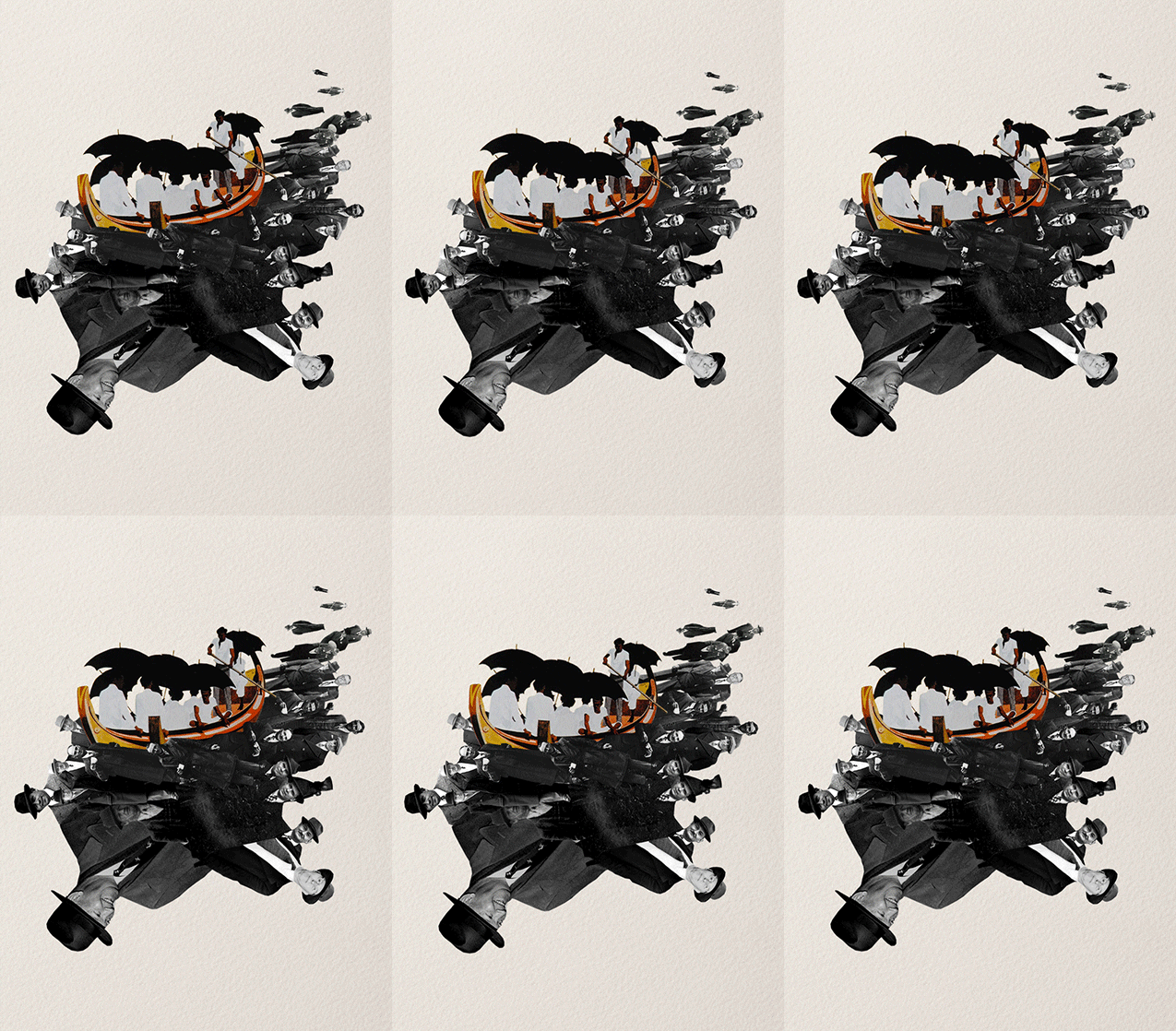
The pragmatic businessman is always composed: abundant hair fixed in a quaff, gym-fit form clothed in cognac oxfords and a charcoal puppytooth suit, decisions made from behind a custom mahogany executive desk resting atop an oak parquet floor. Currently, however, he’s floating a few thousand feet above his ordered life.
Bothered, he turns this way and that. It’s quiet, save a faint wind against his bare face and hands, but dozens of office buildings and businesses—working in commercial properties, he knows their owners, though not by name—ascend upward to a sky blue-ing with dawn, like bubbles rising from the floor of a designer hot tub.
Other people dot the horizon, but it’s too far away to know who they are and what they think about the current situation, which is fine. He prefers not to speak with people who can’t be of use, or worse, are stupid. He once met a HR guru at a conference who, over complimentary box lunches, tried to convince him that no one could ever truly know if they were dreaming or not. Another delicate pond lily who retreated into speculative nonsense to avoid facing a clear-cut reality: whether one was dreaming or not doesn’t matter because nothing matters.
Far beneath him lay hundreds of puzzle-piece plots, some still checkered with lawns, swimming pools, and patios, all else having risen into the atmosphere and beyond. Paved roads below him connect the empty concrete foundations. Once dirty wet floodplains, then upscale commerce surrounded by beautiful gated communities, now only the gutted remains of his work. But wide, deep, green, threading the landscape, a barely-wild river still meanders in loping curves—to the businessman’s eyes, it’s a blight, really, amidst so many sharp-and-proper angles. Since time immemorial, humankind’s responsibility was to tame nature, and this river—he couldn’t remember its name—had yet to fully submit.
He begins to sink from the sky and, after a short time in which he’s bored, stops midair at about the height of a medium-sized skyscraper, a class of structure he’s yet to develop, though there are plans to make plans.
Just then, a deep, sonorous roll, like that of tympani, swells. His ears dampen. Heaps of trees sprout from the ground in clusters along the riverbank. Their shape calls to mind those famed, pyramid-shaped office buildings in Indianapolis, though wrapped in hunter-green leaves with trunk-bark resembling the burnt crust of a crème brûlée.
The businessman doesn’t quite recognize the tree species. Like the river, the name escapes him. He wonders how many board feet they might yield, and whether their wood might fetch a good price.
He begins to sink again. He’s set down near the stony bank of the river. The place is familiar. It occurs to him that this is his property, still undeveloped. He’s been here before, just once, before purchasing it. He remembers the river back then was clean, pristine, flowing smoothly in the evening sun, surface flickering. Now, wrecked logs and branches compose uncouth makeshift dams and thatched domes, bogging down the current and tinting the water bourbon. Beavers did this. The previous owner had ignored the law and rid the area of them a decade ago, but they’d clearly returned. Were he to try to sell this parcel of land in its current condition, no one would bite. He steps over a log with teeth marks near its trunk and stops at the river’s edge.
He then feels an itch on his wrist. When he reaches to scratch it and touches his skin, it feels rough and hard. He looks down and realizes it’s crusting over with what appears to be bark the same color he’d seen on the other trees. His feet burst through his oxfords. He tries to turn, but his toes dig into the soil like roots. His torso stiffens; soon he can only face straight ahead, looking out over the river. His arms stretch and grow leaves. Something thick is growing from the top of his skull, reaching up and up, sprouting limbs along the way. Creak. Crick. The buttons on his plaid shirt pop open. His clothes tear and fall to the ground. Now the only thing he can move is his eyes—are they knots of wood?—and he’s breathing through the leaves on his branches as his roots drink moisture from the ground.
A wet gulp from the middle of the river grabs his attention, near one of those half-submerged thatched domes. From below emerges a beaver, which swims toward him, round head breaking the water while paws and tail paddle below the surface. It clambers atop a large stone, whiskers tipped with small drops of river water, char-black eyes interrogating those of the businessman. Then it speaks, voice gravelly. “What’s your name, traveler?”
He considers this. Like those of the river and trees and people, his own name escapes him. “I’m a businessman.”
“Ah.” The beaver wipes its nose. “I’m Bodhi. Let’s call you Thatch. Perhaps you have built a home from tree bodies before? Out there where we no longer go? Now you will become a piece of the home I’m building.”
“I don’t understand.”
“Yet.” The beaver slides down from the stone and waddles over. It sets its front paws on Thatch’s trunk. It tilts its head to the side and sinks its long, orange incisors into his bark. Thatch shudders. The wound begins to form tears of sap, the first tears he has cried since being a child shown only utter, purposeful neglect by parents parched and wilted from existing. He wishes to wake up, to once again be composed, to be the one composing rather than part of someone else’s composition, but it’s not a wish that will be granted. He’s the answer to the beaver’s wishes, bestowed with a name and a purpose and the holy fright at being, for the first time, a home for someone other than himself, someone whose name he’ll soon care to know.