

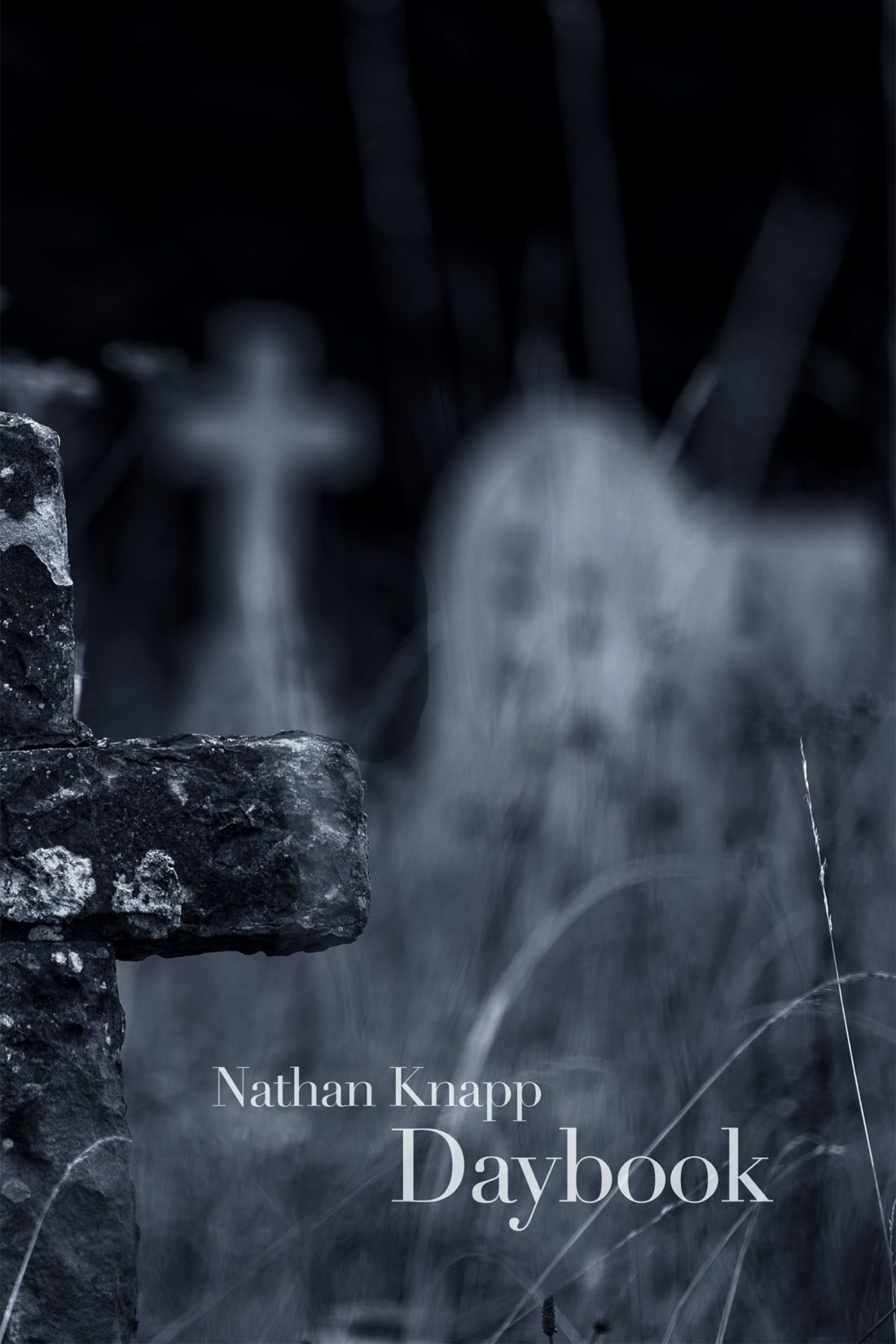
A couple definitions of the word daybook: a ledger in which transactions have been recorded as they occurred and a diary. Nathan Knapp’s book isn’t exactly either, but both descriptions contain elements of what it is. Structured as a daily journal written between Thanksgiving 2020 and Thanksgiving 2021, it is an incantatory accounting of the writer’s memories, fears, sins, hopes, and fantasies set off by a return to the hometown he’d left years before expecting never to return.
Most people who move away know the way coming back to a hometown activates unresolved childhood preoccupations. A hunting trip with his grandfather triggers a memory of his uncle asking this grandfather to scatter the uncle’s ashes after the first snow following his death. This, along with several other persistent phrase/images recur throughout the book like milemarkers. Only instead of telling the writer and reader of the distance traveled, they underline the many ways that, though gone from this little town for many years, there’s no ever leaving it.
Aside from death, sex and religion are the other obsessions Knapp keeps circling. Raised devoutly Protestant, he claims no longer to believe. But few pages of this book are without either Christian imagery or ideas. The three trees outside his window keep being referred to as a Christ-like trinity even after Knapp realizes one day in the yard, looking at them from a different angle, that they’re actually just two trees, one having a twinned trunk. He’s seeing what his life has trained him to see, patterns that someone with a different biography would never connect.
Knapp’s admissions of sexual desires out of line with his upbringing and what he believes to be societal mores are bracing in their unvarnished bluntness. His interactions with cam girls and strippers ride the line between deadpan comedy and sad sack confession. It’s a rare candor on a subject few writers handle well. As Knapp writes, the trouble is that defining sex either misses its magic or it kills it with words.
Yo-yoing between youthful scenes, present day observations, and self-conscious references to the writing of the book itself, the result is a kind of psychogeographical prose poem. Knapp wants to free himself from the ghosts who haunt him but ends up making peace with them instead. It’s an unexpectedly graceful ending to a narrative that begins with so much torment and doubt that a good outcome seems unlikely.
As Knapp writes late in the book,“These pages such as they are are my exposure.” He’s unburdening himself and shining a light places that usually remain in the dark. I don’t know how factually correct his telling of his life is but it rang absolutely true and that’s all I ever want from art. It’s one of the best pieces of contemporary writing I’ve read in the last few years.
Order Daybook directly from Splice if you can.