

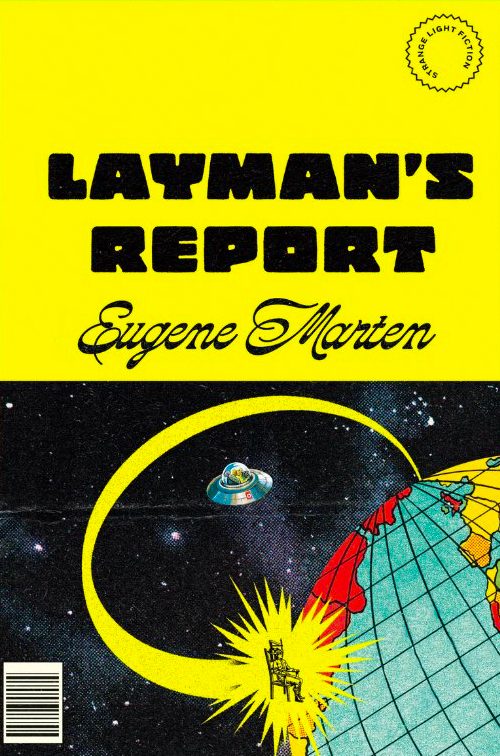
Sometimes a book will paint a person in an entirely new light. Fred Leuchter—the Holocaust-denying, self-taught execution equipment engineer and star of Errol Morris’s 1999 documentary, Mr. Death—is nothing like what I thought he was in Eugene Marten’s coldly brilliant novel.
The first chapter doesn’t mention Leuchter. Instead, it is a vivid description of a murderous crime spree that ends with the messy and inhumane execution of its perpetrator. It is a perfect bit of scene-setting to a portrait of an odd but somehow entirely American life.
I don’t know which details of Leuchter’s life Marten made up and which were taken from court documents and journalism. There were times when I was tempted to reach for the computer to fact-check this or that but I resisted. The book is a novel and therefore concerned with truth rather than just fact. I did rewatch Morris’s movie about a third of the way through my read and found it needlessly showy and mocking by comparison. That is not the memory I had of it, but, as mentioned at the top, Marten’s book has reshaped my conception of its subject.
Rather than putting down Leuchter’s ludicrous questions about the functionality of gas chambers or making a kind of circus of his devotion to improving devices of death, Marten presents the events of the man’s life at a slight remove but without judgment. There is a kind of bemused, poker-faced tone throughout, daring the reader to make assumptions and moral decisions without ever doing so for them. It’s like laying out the rope and pointing out a sturdy beam near the rafters and trusting that we can do the rest ourselves.
In the few interviews with Marten that I found online, his questioners often mention Don De Lillo, and it’s an apt comparison. Both use historical events and a kind of ironic remove. This is the only book of Marten’s I’ve read so far—though I ordered several others while reading it—whereas I’ve read many of De Lillo’s and there are distinct differences between the two writers. Perhaps Marten’s canvas is smaller or maybe that his subject is from humbler stock. The elimination of much pop culture signifiers is certainly similar. There is a sense that the narrator is new to town, if not the planet. It gives the story an otherworldly cast though the particulars couldn’t be more ordinary.
Leuchter is a man shaped by personal tragedy and privation. He fashions a profession almost of his own invention, then is doomed by its success. He is a small man who can’t conceive that the very things he’s best at—the tinkerer’s problem-solving, out-of-the-box thinking, the dogged persistence—are the things that make him blind to anything beyond his expertise. It’s the problem of confirmation bias. We always find what we’re looking for. We extrapolate our experience to explain the entire world.
The Fred Leuchter of Marten’s novel is still the naive savant from Morris’s movie. He drinks coffee and chain-smokes all day. He works on top-secret projects in his garage. He makes alliances with horrible, wrong-minded people. He improbably gets more than one woman to marry him. But he’s not a figure of fun. Not a caricature. There’s a low key tragedy to the events of his life and to his reactions to them.
By neither condemning nor entirely inhabiting the man’s skin, this book allows a reader room to walk around a place with people that are both entirely ordinary and utterly alien. Leuchter goes to the documentary’s premiere at the Sundance Film Festival incognito and hates the movie. I wonder what he’d think of this book? It doesn’t really matter, because this isn’t a biography of one person but rather an attempt to render an entire culture through the particulars of one man’s life.
It’s scary but also deadly accurate. I can’t imagine a trajectory like Leuchter’s in any place but America.