

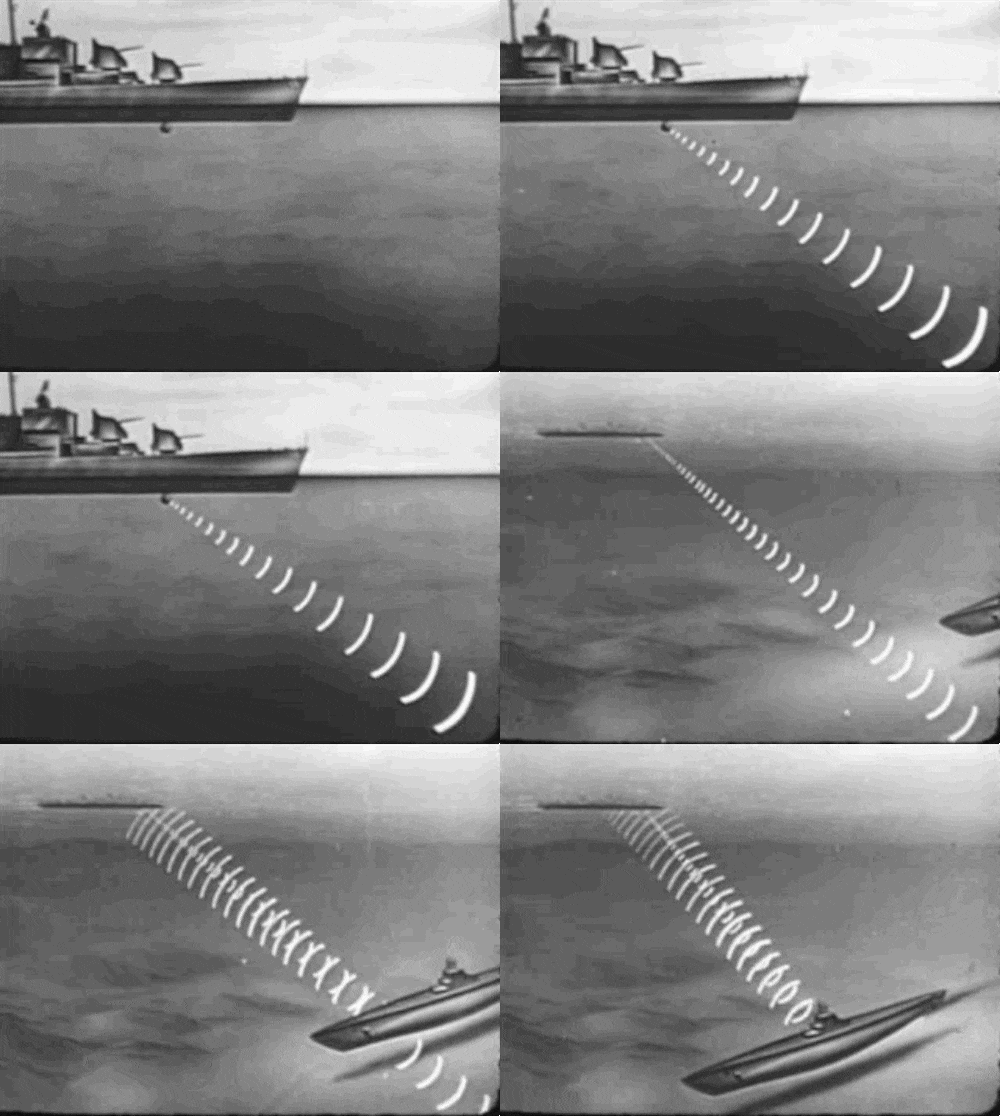
The ping isn’t a sound you hear. It’s a sound you feel, threading its way through drywall, like a signal searching for marrow. At first, it was just static: NOAA logging whale carcasses like rainfall, minor sonar distortions, contained. But then came the evidence. Do-not-swim advisories on frequencies no vessel could trace. Forty sailors’ worth of calcium pressed into the bedrock. Bones to coral. Flesh to sea foam.
The alerts come faster now. A car alarm rises outside, its long scream needling into my lungs. I reach for calm. Open the meditation app. Tides, it says. Inhale. Hold. Exhale. Again. Then the voice, almost curious: Your brain waves resemble those of cave divers who chose the wrong tunnel. The ones who kept swimming.
By dawn, something primal knows more about desire than I do. Salt crusts my throat. The taste is sharp, metallic – like hydrothermal seams leaking iron into blackwater. I find myself drawn to secluded coves, to the quiet pull of depths that crush the human bone. My camera roll fills with screenshots I don’t remember taking: erosion models, sonar overlays, red flags on empty beaches.
I calculate how long it would take to swim straight down. How deep before the body stops trying to float. I think of that classified Navy report – the one where whales swam in geometric spirals until their organs failed. I trace their paths on my skin. They feel like circuit boards. They taste like salt.
White noise apps promise better sleep: the sound of water pressure at terminal velocity, mimicking the soundscape of the Challenger Deep. My screen time report says I spend seven hours a day listening to something. It doesn’t mention what’s listening back. Doesn’t explain why my veins run brine now. Why I can lie motionless for hours. Why my blood oxygen saturation defies known physiological limits. I sink deeper every night. The bathymetry of my organs keeps changing. My lungs feel crystalline.