

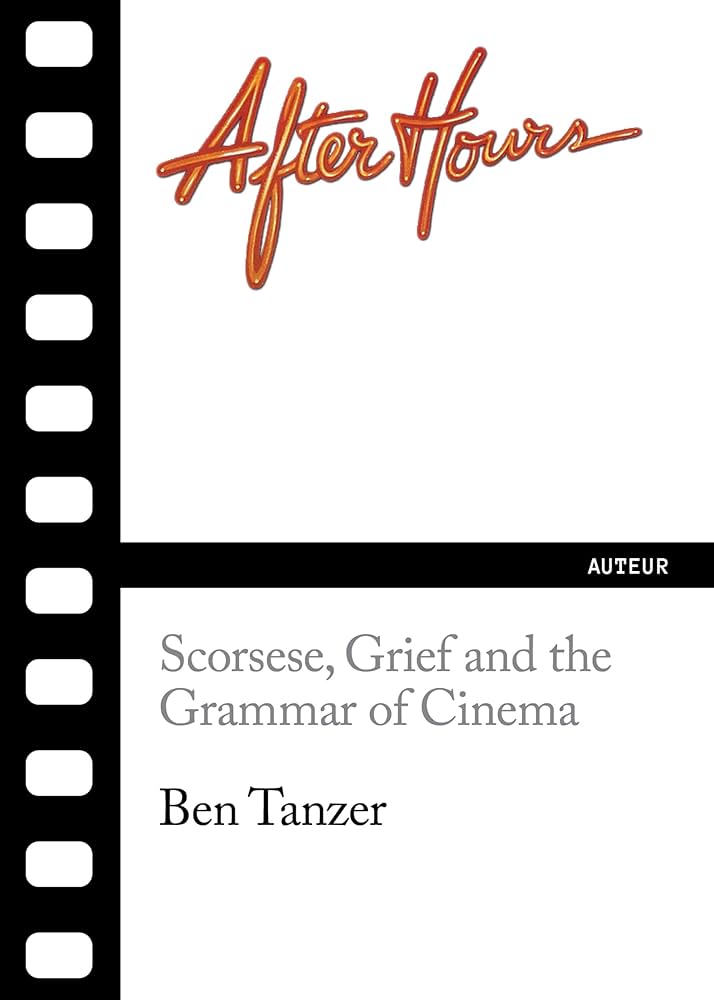
A touchstone, in its original use, was employed to compare the quality of gold or silver; in common parlance, it’s an event or object employed to judge highpoints in one’s life or to measure achievements against. Martin Scorsese’s 1985 dark comedy After Hours is that crucial work of art for Ben Tanzer. So much so that he’s written an entire book with that movie as a prism to see the key points of his past and present through.
The film is about an office drone named Paul Hackett who one night loses his keys and follows a pretty girl down a Lower East Side NYC rabbit hole of art, crime, and desire. It’s a love letter to the art scene of that city that was about to die. It’s also about the longing to be more than what you currently are.
Tanzer’s father was a painter who died young. He and his mother loved the movies and took Tanzer and his brother to see everything, especially Scorsese. The early 80s was a transitional period in that director’s career. After the early critical success of Mean Streets, Taxi Driver, and Raging Bull, Scorsese made The King of Comedy, which was a financial flop. He tried and failed to finance an adaptation of Nikos Kazantzakis’ The Last Temptation of Christ, and was at loose ends. After Hours can be seen as a bridge between 1970s and 1980s America as much that between one mode of expression and another. Hippies into yuppies; Taxi Driver into The Color of Money. There’s an anxious purgatory feeling throughout the movie.
Tanzer links various points of his own biography to Hackett’s wanderings. He lives in New York and San Francisco in his twenties, working straight jobs but dreaming of becoming a writer or filmmaker. He endlessly compares himself to his father, a man who was creatively fulfilled but did not gain the critical or commercial recognition he desired for his life’s work, then died before turning sixty. Tanzer interviews friends, family, and fellow writers about their relationships to art and life, to see how their take jibes or departs from his own. He’s constantly questioning whether where he is and what he is is where and what he should be.
Tanzer continued working office jobs and started a family, opting for the stability and security of a straight life instead of the precarious one of an artist. Yet the need to create kept gnawing at him, so at thirty he began to write, and he hasn’t stopped since. He’s published several novels as well as story and essay collections. In a passage of this book set in the present, he lists at least three titles about to be released and several others well along the pipeline. He’s manically industrious. He also may be the most organized person I’ve ever met. To schedule anything with Tanzer is an exacting process. He’s got his life worked out to the minute—maybe the second—each and every day. He balances work, leisure, art, and rest precisely, then goes back and pours over his data to see where he’s fallen short and could improve. It’s not the most common modus operandi for an artist.
The anxiety that fuels him is the same one that makes Paul Hackett run from art loft to all-night diner to dive bar to warehouse party looking for something he can’t name. Unlike Hackett, Tanzer doesn’t just return to his office job defeated, because Tanzer has seemingly gamed the system. He has the steady support of job and family but also pencilled-in breaks for self-expression. Just ask him to show you the spreadsheet.
Scorsese has never regained the urgency of his pre-After Hours work, in my opinion, but the later films are certainly those of a master craftsman. A book about a piece of art will rarely supersede its subject; it’s baked into the process that it will play second banana. What Tanzer does best here is show how a movie can serve as a bond for family and friends and can also light a path forward. Inspiration can come from art or from life but is usually a combination of the two. Tanzer’s book is a funny, searching look into where it all comes from and an earnest attempt to reason out what it all adds up to.
You can grab a copy of After Hours: Scorsese, Grief and the Grammar of Cinema from Ig Publishing over at igpub.com/after-hours.