

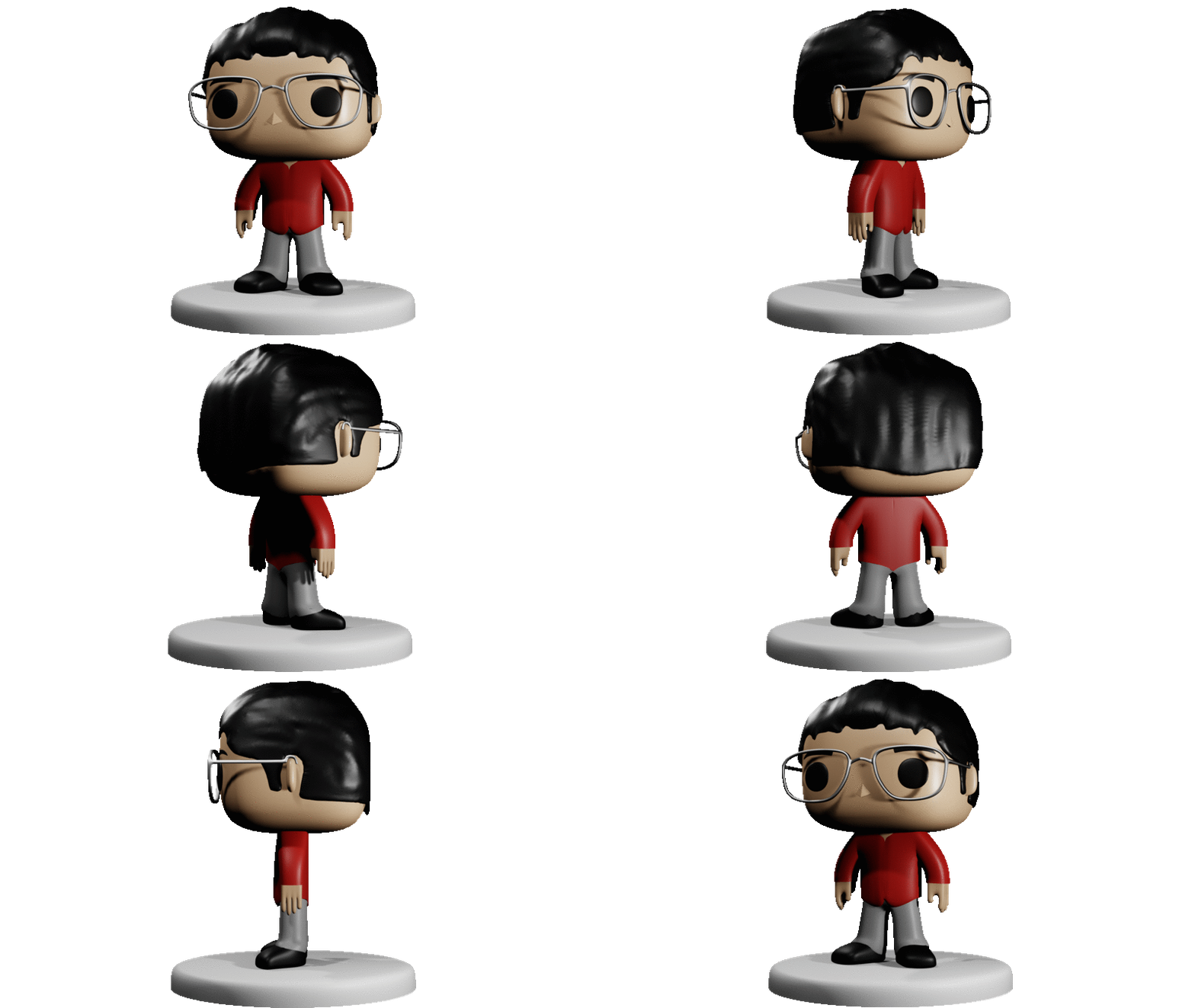
“A POP OF FUN”: AN EXCERPT FROM POP!
By Tex Gresham and KKUURRTT
From The New Yorker—
THE POP OF FUN:
HOW FUCKO’S ‘POP’ FIGURES COME TO LIFE
by Brian Mayonnaise Jr.
In the world of pop culture collectibles, few items are as instantly recognizable as Fucko Pops. These vinyl figures—characterized by oversized heads, dark eyes, and a diminutive cartoonish form—have become ubiquitous in stores, online shops, and collectors’ shelves worldwide. Yet, for all their popularity, their creation remains a bit of a mystery to many. How do these beloved figures come to life?
At the heart of Fucko’s appeal lies its distinct aesthetic: a nearly universal, stylized interpretation of famous characters. The oversized heads and minimalist features are signature traits that immediately evoke the Fucko brand. These choices were born from Fucko’s original founder, Robert Fucko, around 2005. Robert had a desire to make a toy that was both immediately recognizable and affordable to mass-produce, an affordability that both retailers and consumers demand.
The creation of a Fucko Pop begins long before the first vinyl pellet is melted. It starts, as any good venture into the world of licensed products must, with a deal. Fucko, a company headquartered in Phoenix, Arizona, needs to secure the rights to manufacture figures based on the characters it wants to immortalize. This means negotiating with Disney for the next Star Wars hero, or with Marvel for the latest superhero sensation. Once the licensing agreements are in place, the design process kicks into gear.
Once the concept is solidified, a designer begins the process of translating an idea into a digital form with 3D modeling software like ZBrush to produce early physical prototypes. These prototypes are scrutinized, adjusted, and reworked before they’re approved for mass production. It’s only once the design is perfected that it moves into the next phase—the creation of molds.
The molds themselves are the backbone of the production process. Made from either steel or aluminum, they are carved with incredible precision. The molds are then used in an injection process, where heated pellets of PVC (polyvinyl chloride) are injected under pressure into the mold, taking the shape of the character. PVC is the material of choice here—cheap, durable, and flexible enough to capture the intricate details of Fucko’s figures without cracking or losing its shape over time.
Once the figures are molded, they are each then given vibrant life through the painting process. Painting is one of the most important—and most delicate—stages in the creation of a Fucko Pop. The figures are often first spray-painted with a base color before hand-painting is applied to smaller features like facial expressions, logos, or tiny details that give the figure life.
After painting, each Pop undergoes a quality control check. Any imperfections—whether a misaligned paint job or minor mold defect—are caught here, ensuring that only flawless products make it to the next stage. These final figures are then placed in the signature Fucko Pop boxes. Each box features a clear plastic window that showcases the figure inside. While also serving to protect it, these boxes are an essential part of the Fucko Pop experience: for collectors, it’s just as important to keep the figure inside the box as it is to admire the figure itself.
At last, once the Pops are carefully boxed and sealed, they are ready to be shipped. Fucko operates multiple distribution centers to handle the vast quantities of figures it produces. The Pops are then sent out to retail partners—ranging from big-box stores like Walmart and Target to smaller independent shops—and are often made available directly through Fucko’s own website for collectors eager to get their hands on limited-edition releases. And, as with any product made for the obsessive collector, the market is often a delicate balance of scarcity and demand.
Fucko Pops are designed to evoke fondness and nostalgia, all while being cheap enough for nearly anyone to buy. In the end, the creation of a Fucko Pop isn’t just about turning raw plastic into a desirable collectible. It’s about distilling something essential and recognizably human from our shared pop culture and packaging it into a form that transcends its plastic origins. Fucko has not just created a toy but a kind of cultural artifact, one that speaks to our collective fandoms, nostalgia, and the love of the characters that populate our culture, our imaginations, and our art.
Daddy finishes reading the article from The New Yorker to his son, who’s tucked in bed, sleepy, cuddling his Rudy Fucko Pop.
His son says, “Daddy? What is art?”
Daddy says, “Oh geez, son. That’s a big question.”
“But what is it?”
“Well… Hang on… I need to go to the bathroom. But when I get back, I’ll have an answer for you.”
“Okay.”
In the bathroom, Daddy sits on the toilet and puts nose to phone. He opens up the thing that gives the answers now and types: what is art?
This is what it gives him:
Art is a dynamic and multifaceted form of human expression that transcends literal communication, using various mediums––such as visual, auditory, or performative––to convey emotions, ideas, and experiences, while engaging both the creator’s inner world and observer’s personal perspective, challenging norms, evoking feelings, and offering new ways to perceive and understand the world and the complexities of the human condition.
Daddy types shorter because there’s no way he can say all of that to his son. He wouldn’t understand most of it. Daddy mostly doesn’t. The thing with the answers gives him:
Art is a form of human expression that uses various mediums to convey emotions, ideas, and experiences, engaging both the creator’s vision and observer’s perception.
shorter.
Art is human expression that conveys ideas and emotions through various mediums.
shorter.
Art is the expression of ideas and emotions through creative mediums.
shorter.
Art is the expression of creativity and emotion.
shorter.
Art is creative expression.
shorter.
Art is expression.
shorter.
Art is.
shorter.
Art.
And so, armed with this answer given, Daddy returns to his son’s room and tells him a variation of what he’s read, vaguely in his own words, but mostly in the words of what he’s read. Because he isn’t really creative enough to make up something of his own.
By the time he’s done explaining what art is, his son is asleep. Soundlessly. Peacefully. Daddy slips out of the room. He leaves the door open a crack so that his son can stay comforted by the hallway light––but mostly so he can check on his son throughout the night. Walk by and peek in because he truly loves the thing he has made.
The son is 38, by the way.