

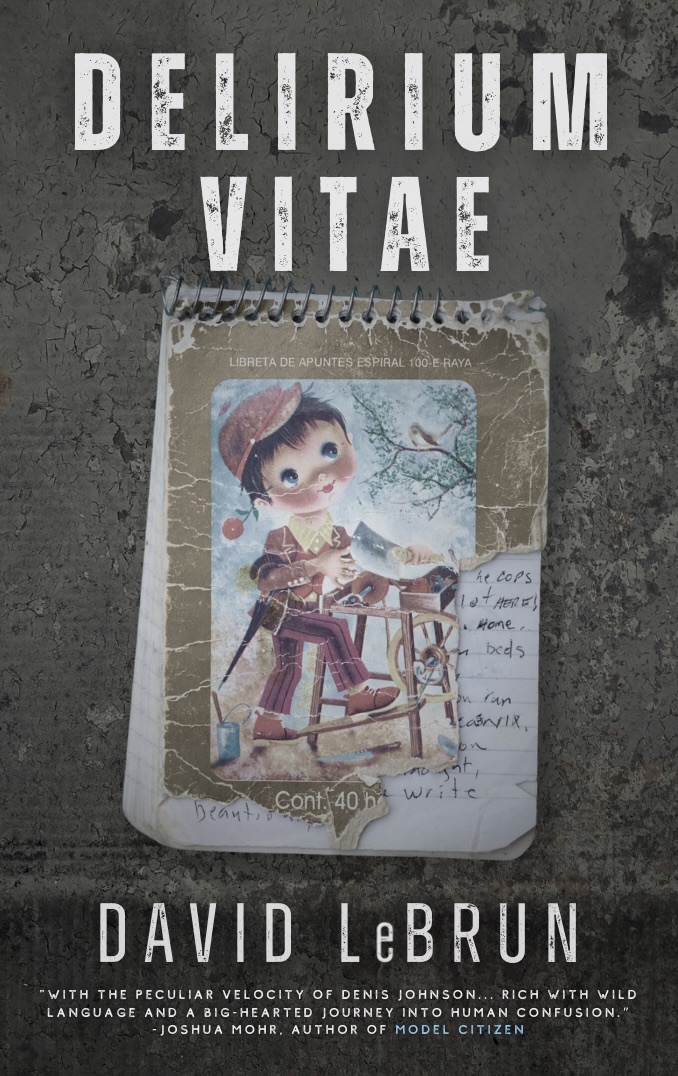
There’s a specific kind of silence that follows a person when they decide not to go home. Not grief. Just the quiet of knowing nobody’s waiting. A stillness that doesn’t demand much, but never really lets go.
That’s the feeling that trails through Delirium Vitae, a memoir that feels less like a story and more like a field recording left running. It doesn’t ask to be read. It just keeps going. Messy and alive in a way most books don’t get to be. There’s no performance here. No agenda. It just exists. Which is kind of the point.
LeBrun is twenty-four and cold in Montreal when he decides to leave. He takes a voice recorder, a few notebooks, and the hope that maybe moving will make him feel less erased. But motion doesn’t solve anything. It just shows you what was already cracked. Rain-slick roads. Tin roofs. Cramped bus aisles. Flickering screens in distant cafés. Nothing gets wrapped up. That’s what makes it real.
I read most of it at 1AM while refreshing old tabs I forgot to close, and it felt like the only thing in the room that wasn’t trying to lie to me. No ads. No advice. Just someone telling the truth because it hurt too much not to. This isn’t a memoir about how to live better. It’s about how to keep living at all.
The book moves through moments that hit like waves, some loud, some quiet, but none that offer easy answers. It’s full of fragmented experiences that linger and accumulate, capturing the texture of life on the road and the ache of displacement.
There’s no comfort in this story, except maybe the hum of a motel fan or the slow rhythm of breath in restless sleep. It’s sweaty, sick, and staring at ceilings that spin quietly in time with exhaustion. That’s the scene that stayed with me. Nothing happens. And that’s exactly why it does. Just a body, still moving, in a room meant for someone else. That’s how motel rooms work sometimes. They trap people who never meant to stop.
This is LeBrun’s first book. He lives in Montreal. But it doesn’t read like a debut. It reads like something that almost got deleted, but didn’t. There’s no big story here. No arc. Just a guy trying to name what hurts before it fades. Delirium Vitae isn’t about falling apart. It’s about being honest that you already have, and what it means to keep going anyway.
Tortoise Books put it out, and that makes sense. They’re one of the few presses that don’t feel the need to polish everything into a product. They let it stay raw. That choice matters.
Delirium Vitae doesn’t end with closure. You close it because you need to look out the window for a minute. You need to remember what your body feels like.
You can order it directly from Tortoise Books if you’re ready to carry something honest for a while.