

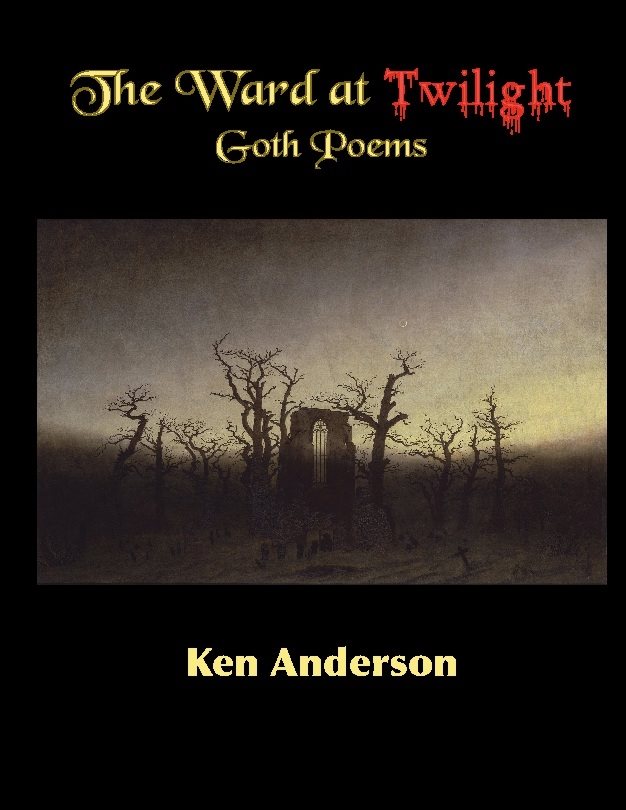
Ken Anderson’s The Ward at Twilight presents a heartrending exploration of vulnerability, memory, and the passage of time. Anderson’s language is both lyrical and stark, conjuring a sense of haunting beauty and often navigating the interplay between a metaphorical (and sometimes literal) sense of light and dark.
With each poem building upon the last, creating a cohesive narrative thread, Anderson’s use of varied forms—from free verse to structured sonnets—adds to the dynamism of the work, allowing him to siphon intricate emotions effectively and alluringly. The opening poem establishes the collection’s tone, drawing readers into a world where the mundane becomes infused with deeper significance. His imagery is vivid, often capturing the ephemeral nature of moments and glimpses of life that linger just beyond reach.
A superior theme throughout the compilation is the relationship between the individual and their environment. Anderson frequently employs the ward as a metaphorical space, acting as both confinement and refuge. The poems burrow into the emotional landscapes of the characters, revealing their fears, hopes, and the universal quest for human connection.
While some of the poems can feel dense with literary devices, in this way Anderson demands attention from his readers but the effort is graciously rewarded. Anderson’s ability to encapsulate profound truths within brief stanzas is commendable, and his exploration of mortality is both respectful and unflinching. Anderson’s voice resonates with a raw authenticity, capturing the weight of care and exposing the bittersweet nature of human interactions. The blend of personal and collective experience enriches the reader’s understanding, inviting reflection on their own encounters with the ebbs and errs of life.
The Ward at Twilight stands as a welcoming contribution to contemporary poetry, reflecting on the nuances of existence in a world of impermanence. Anderson invites readers to embrace moments that happen in the twilight. Moments that are heavy with ambiguity but also with beauty. This collection is a compelling testament to the power of poetry in its never-ending attempts to articulate the inexpressible and to connect us in our shared humanity.